Catania, at the table
The city's finest garden.
And, across the road,
where you eat.
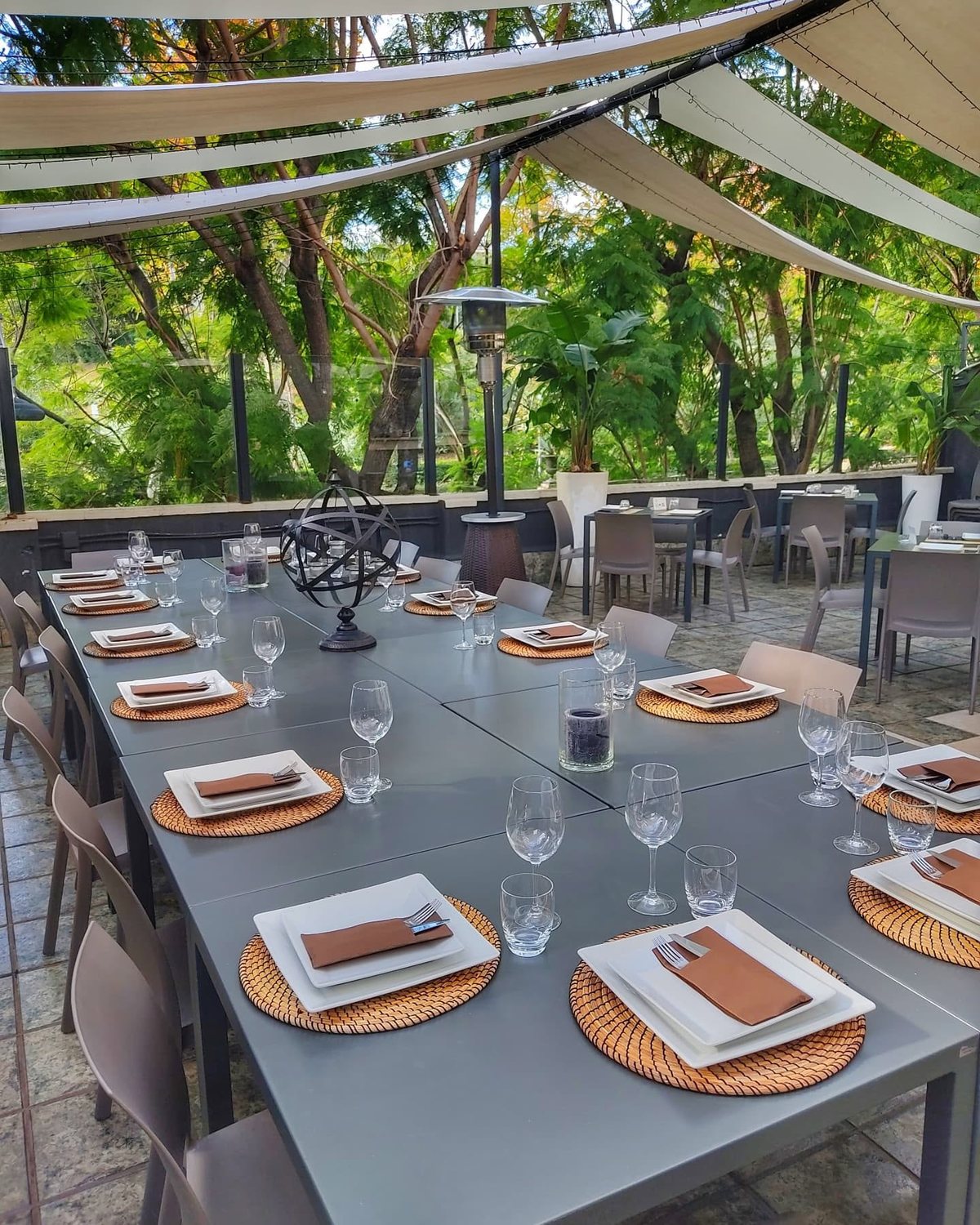
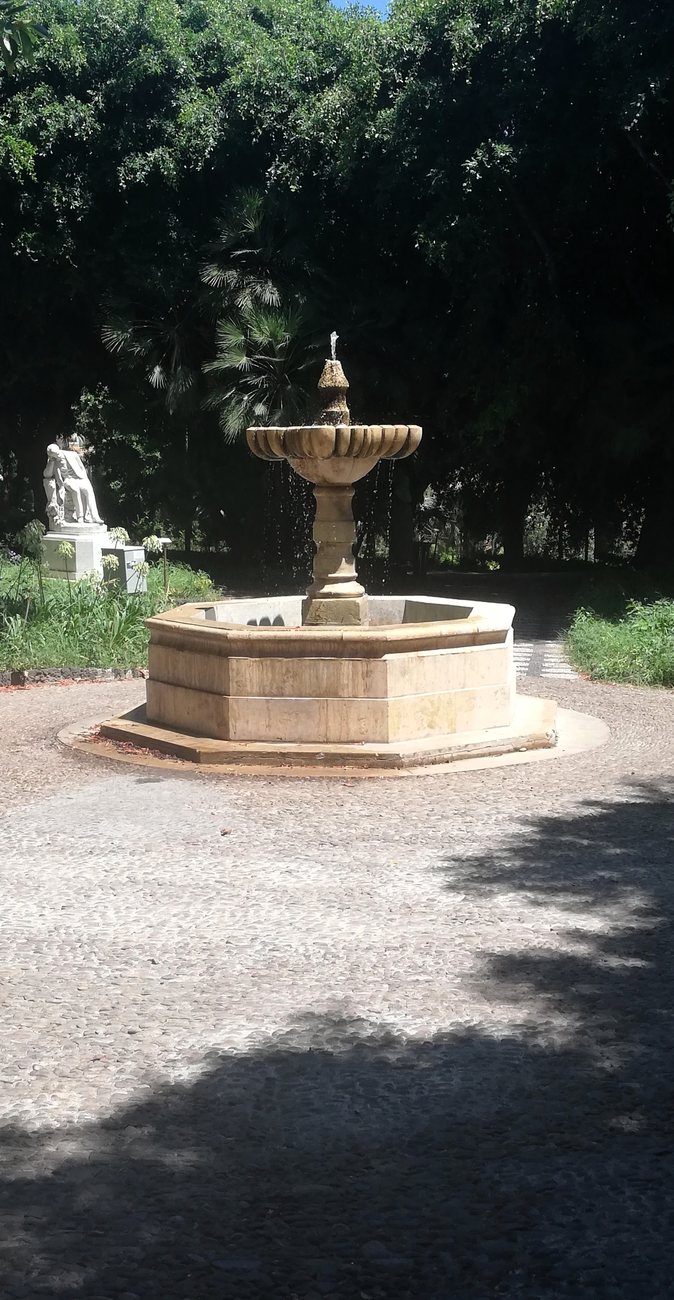
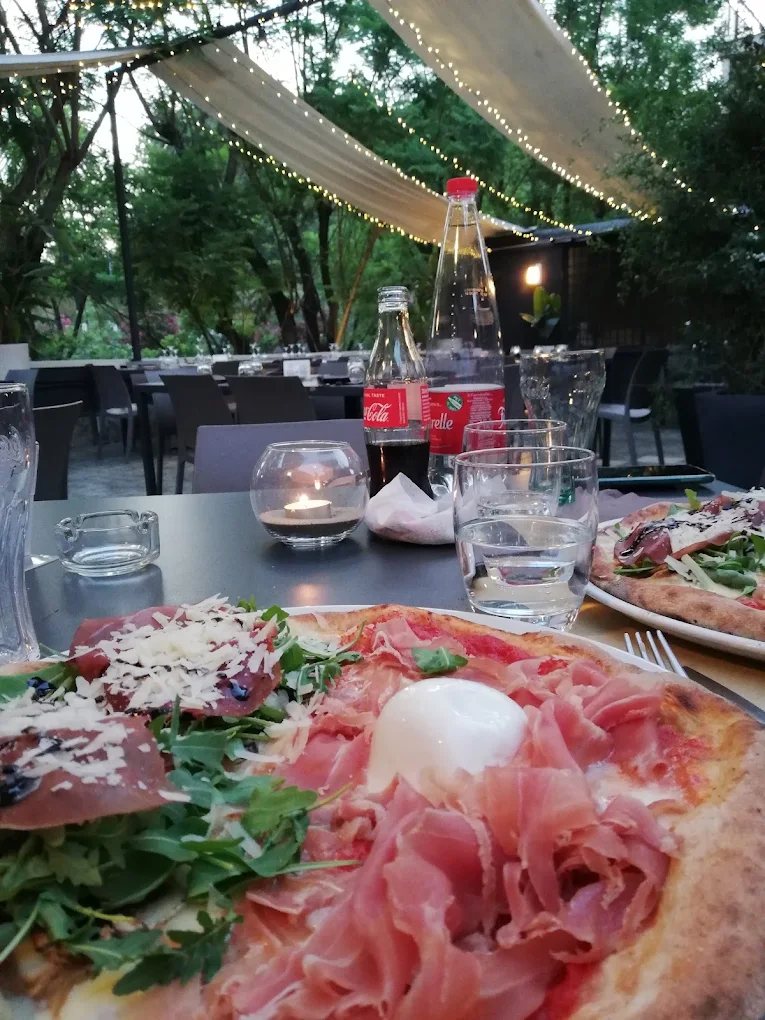
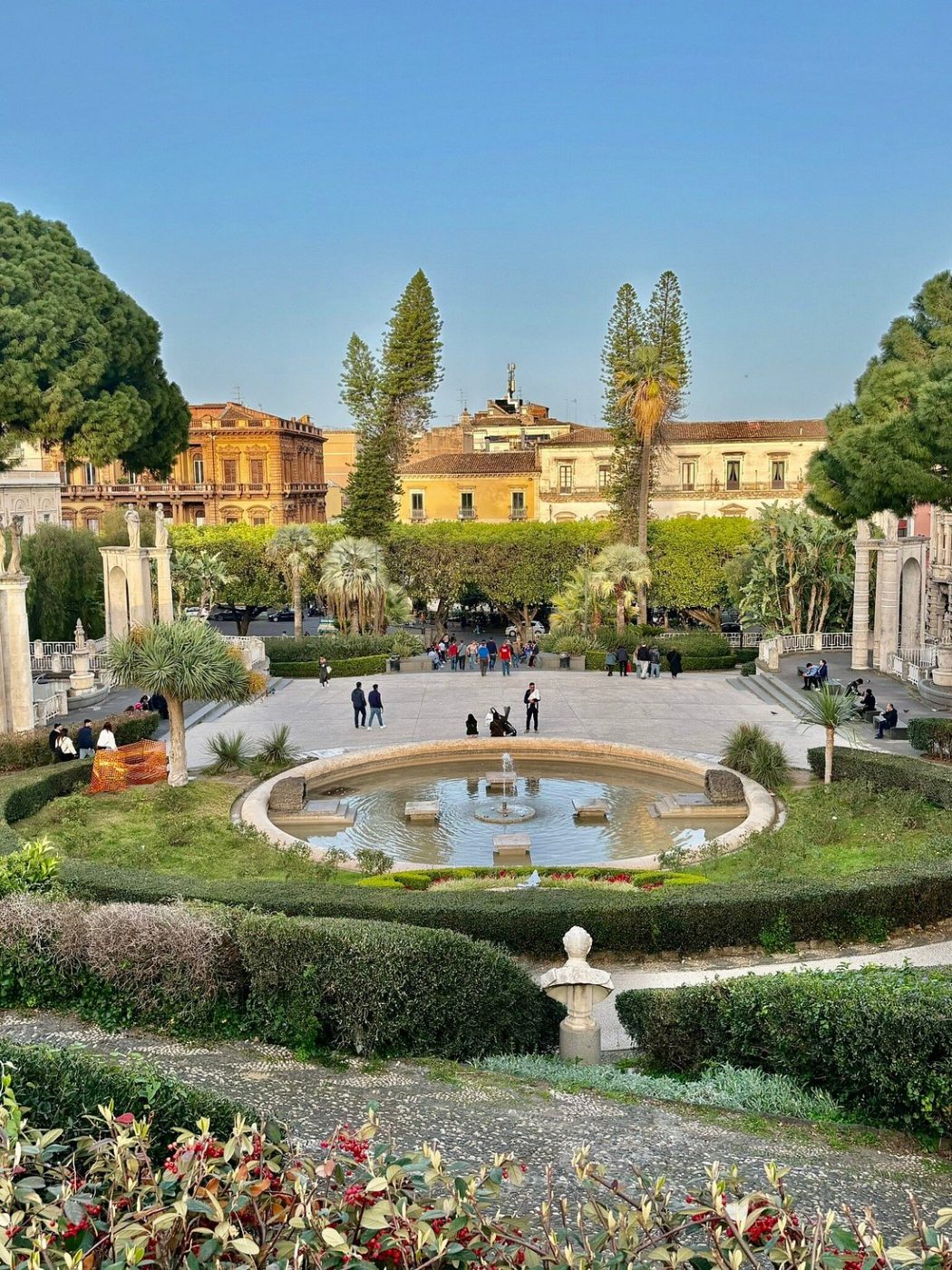
Villa Bellini is Catania's historic garden: seventy thousand square metres open to the public since 1883, at the top of Via Etnea, where the city goes to breathe. La Capannina sits on Via Sant'Euplio, along its flank — and from the first-floor terrace you eat looking into the crowns of the palms.
If you came to Catania to eat, this is the easy stop: the garden on one side of the street, the wood oven on the other.

The canon
What Catania eats,
and why it eats it that way.
This city's cooking is a handful of things repeated well: tomato, aubergine, salted ricotta, fish from the market, pistachio coming down from Bronte and wheat coming up from inland. Here is the short list — the one worth knowing before you sit down.
Tomato, fried aubergine, salted ricotta, basil. It carries the name of Bellini's opera: the story goes that the playwright Nino Martoglio, faced with a perfect plate, cried «Chista è 'na vera Norma!».
In Catania it is masculine and shaped like a cone: the profile of Etna. In Palermo it is round and feminine. Around here, that is not a small distinction.
In the morning, with a brioche col tuppo. The local ritual pours the coffee over it in stages, never all at once.
The fish market behind Piazza Duomo: voices, ice, knives. It is where you understand where almost everything on the city's tables comes from.
Thin dough filled with broccoli, potato, black olives and cheese, folded and baked: the bread of the winter holidays. A close relative of our «Catanese» pizza.
Carricante for the whites, Nerello Mascalese for the reds: vines planted on the same lava the city is built from. Plus Nero d'Avola, which comes from all over the island.
Pizza in Catania
Before pizza,
here there was scacciata.
Sicily has its own history of leavened dough and ovens, and it is not the Neapolitan one. Palermo has sfincione, thick and soft, with onion, anchovy and breadcrumbs on top. Catania has scacciata: thin dough filled with broccoli, potato, black olives and cheese, folded three or four times and baked for the winter holidays.
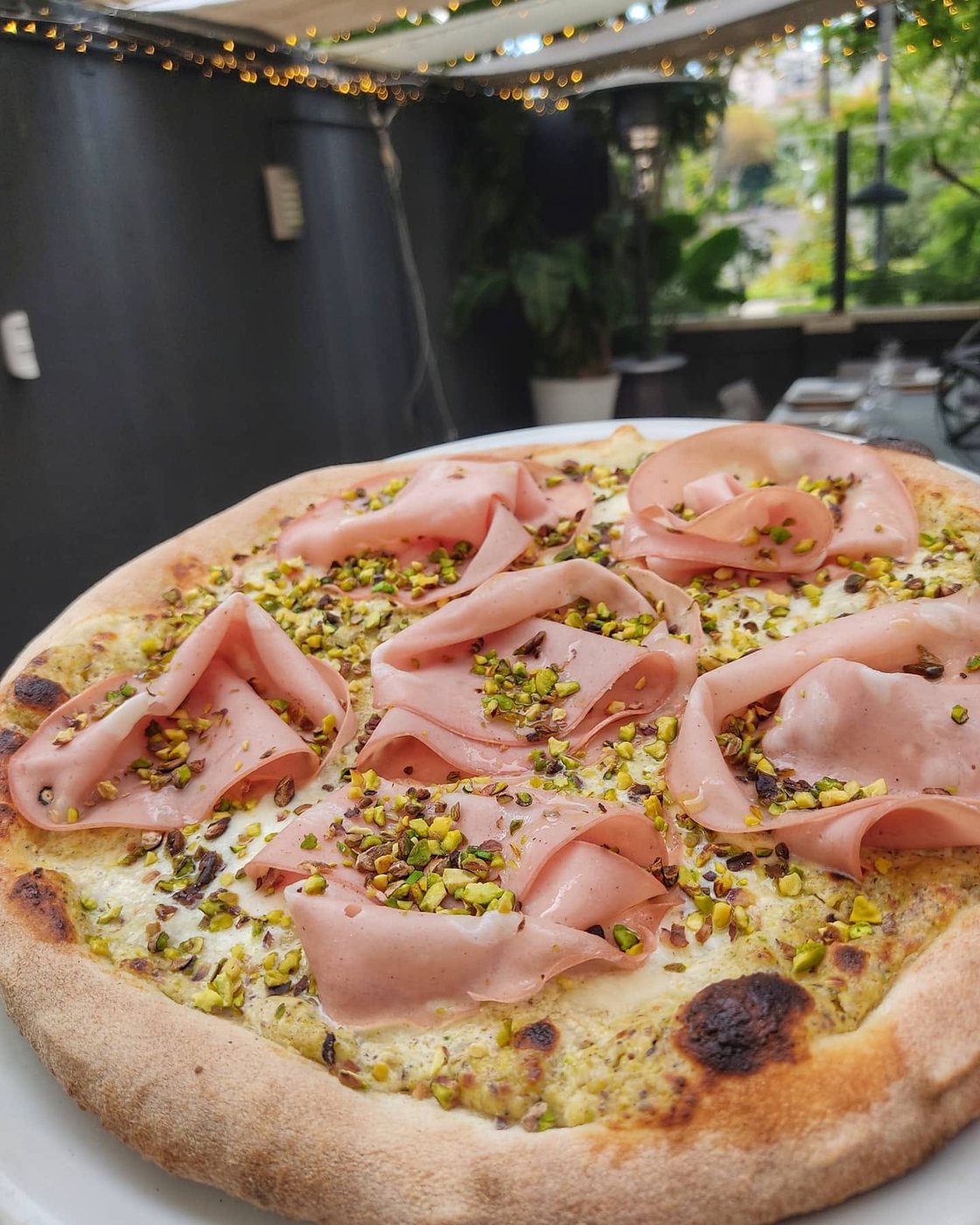
Our Catanese pizza — fresh pepato, steamed broccoli, spring onion, black olives, anchovy — is precisely that scacciata rebuilt on a disc of dough. It is not a quotation: it is the same larder.
Underneath, the dough. We keep two: a traditional long-fermented one and one of Perciasacchi, an ancient Sicilian durum wheat documented on the island since 1809 and catalogued by Ugo De Cillis in 1941. It is named for the kernel's tip, sharp enough to pierce the jute sacks it was stored in.

Why stop here
One stop, three reasons.
The setting. It is the only terrace that looks into Villa Bellini from this height. In summer you dine with the green in front of you and the Via Etnea staircase crossing over the street, a few paces from the door.
The two doughs. Traditional and Perciasacchi, marked pizza by pizza. On almost all of them you can ask to swap: it is the thing we suggest to anyone coming for the first time.
The music. Jazz, swing, songwriters: played live, indoors and on the terrace, at a volume that still lets you talk across the table.
On concert nights it pays to book — the terrace goes quickly.
Across the street
A clock made of plants,
and a calendar rewritten every dawn.
The floral clock. A dial made entirely of evergreens. Beside it, a living calendar: the date is neither painted nor printed — the gardeners rebuild it by hand every morning at dawn, one day at a time, and have done for over seventy years.
The bandstand. An 1879 cast-iron sound shell in Moorish taste, raised on the southern hill where the Prince of Biscari's villa once stood. It is still the stage for the garden's open-air concerts.
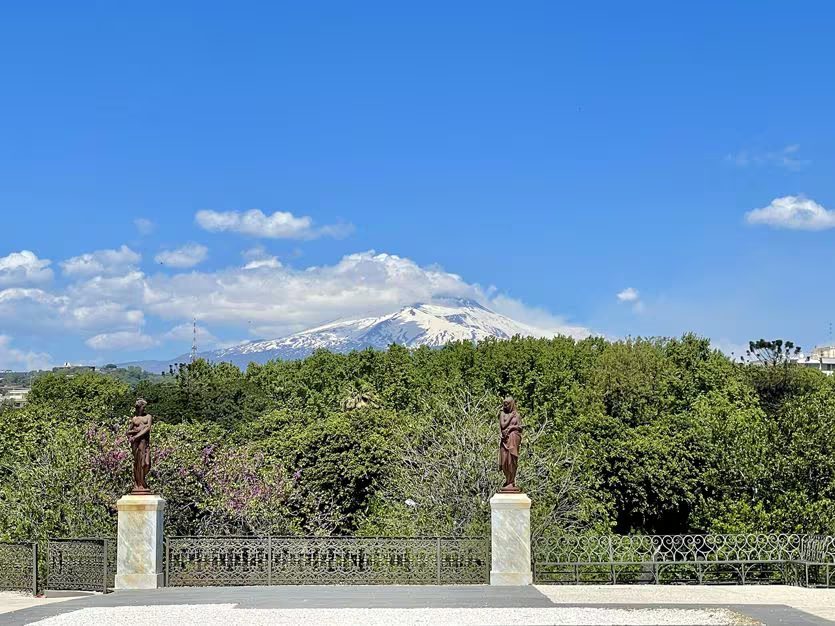
The belvedere. The Catanesi call it the balcony over the centre. From there you see red roofs, the baroque domes rebuilt after the 1693 earthquake and, behind them, Etna.
of garden
recorded
How it began
From a private labyrinth
to everyone's garden.
The garden begins as the private park of Prince Ignazio Paternò Castello di Biscari. The Catanesi call it «the Labyrinth», after its tangled paths.
On 29 September the city of Catania buys the Labyrinth and decides to turn it into a public garden.
Ignazio Landolina starts the work: the avenues are laid out and the first trees are planted.
The bandstand is raised on the southern hill: a cast-iron structure in Moorish taste that still hosts open-air concerts today.
The Avenue of Illustrious Men opens, with busts of Giovanni Verga, Luigi Capuana and Giuseppe Mazzini.
On 6 January the garden is inaugurated and named after Vincenzo Bellini, the Catanese composer.
The floral clock and the living calendar appear: every morning at dawn the gardeners rewrite the date by hand, in plants.
The name
One word:
Norma.
Vincenzo Bellini was born in Catania in 1801. Norma premiered in 1831, and ever since, in Sicily, «a Norma» means something turned out perfectly: which is why pasta alla Norma carries the name.
In 1883 the city named its new garden after him. The dish, the opera, the composer and the park outside our door all share one name — and yes, there is a Norma on the pizza list too: San Marzano tomato, fried aubergine, shavings of salted ricotta, oregano.